"Dodo" , The First Electric Car in the World

"Dodo" , The First Electric Car in the World - Detroit Electric Model D is the first electric car in the world. As far as I know this car reaches the age of 104 years since the electric car operates. The first electric car is famous by the name of Dodo is a car that ultimately was not accepted due to the mass market can not compete with oil-fueled vehicles.
The First Electric Car in the World

Dodo may reach a most speed of twenty five miles per hour. Recognized or not, Dodo may be a car with the technology that goes on the far side age. Created within the early twentieth century and later displaced by oil-fueled propulsion engine doesn't essentially displace Dodo visionary concept that believe electricity as an energy provider. Until now, electric cars like Dodo still be an enormous dream for factory-made.

Thought creator of Detroit Electric Model D, 100 years past, is taken into account to possess exceeded the age. It created the car for many years as a result of the restricted awareness of fuel. At that point, the time of the Dodo was created, individuals haven't thought that way. So, and even then not sell the car. That is, thought of the creator of thought on the far side the days.

Design of electrical technology Dodo remains terribly modest when put next to the same vehicle output these days. referred to as Dodo by the manufacturer has the power to cruise up to one hundred miles or concerning one hundred sixty kilometers every manner with a full power offer. To be ready to vagabond on the most vary, Dodo ought to receive power offer from the facility offer as high as six feet or concerning 1.8 meters before use.

As it seems 1st, Dodo had unreal of changing into the automotive of alternative several audiences. sadly, the invasion of the oil-fueled cars and so force stop fully and curl creating that dream in 1920. - "Dodo" , The First Electric Car in the World

The History of Electric Cars

The History of Electric Cars

The History of Electric Cars - Based on the history of the electric car, electric cars popular in the mid 19th century and early 20th century, when electricity was selected as the prime mover in the vehicle. This is because electric cars offer the comfort and easy operation that can not be achieved by a gasoline-powered vehicles at that time. Technological developments in the increasingly advanced combustion, especially in the electric starter, gradually reduce the popularity of electric cars. This coupled with the ability of a gasoline car can travel a longer distance, fueling faster, and increasing the charging infrastructure, coupled with the mass production system that is applied by the Ford Motor Company, making the price of petrol cars dropped to half the price of an electric car. Electric cars became increasingly popular, and totally disappeared from the market, particularly in emerging markets such as the United States obese, in the 1930s. However, in recent years, more and more people are aware of the environmental impact caused by gasoline-fueled cars, plus the price of gasoline is expensive and continue to rise, making the electric car back in demand. The electric car is much more environmentally friendly than gasoline cars, cheaper maintenance costs, plus the more advanced battery technology. The drawback is the price of an electric car is still expensive. Electric cars are now starting to gain popularity again in a few countries in the world after such a long time to disappear.

1890s to 1900s: Early history of the electric car
The History of Electric Cars

Prior to his time in the combustion engine, the electric car has held many speed and distance records. Among all these records, one of the most famous is the record-breaking speed of 100 km / h (62 mph) by Camille on April 29, 1899 He was using his vehicle rocket-shaped, with a maximum speed of 10 588 km / h (6,579 mph ). Before the 1920s, electric cars compete with gasoline-fueled cars.

Thomas Edison and an electric car in 1913
1908
Started in 1896 to address the problem of charging infrastructure is lacking, a battery replacement services company started by Hartford Electric Light Company for electric trucks. Vehicle owner bought the vehicle from General Electric Company () without a battery and the battery bought in Hartford Electric with battery systems that can be changed. Owners will be charged a monthly service fee and travel expenses per for truck maintenance costs. This service is available in 1910 to 1924 and cover a total distance of about 6 million miles. In 1917, a company in Chicago running a service similar services for owners of Light Electric cars who also buy the vehicle without the batteries.

In 1897, electric cars began to be used as a commercial vehicle in the United States as a fleet of electrical New York City taxis, cabs are made by the Electric Carriage and Wagon Company of Philadelphia. Electric cars in the United States is produced by Anthony Electric, Baker, Columbia, Anderson, , Studebaker, , , and several other companies in the early 20th century.

Despite having a low speed, but the electric car has many advantages over its competitors in the early 1900s. Electric cars do not cause vibration, electric cars do not remove the exhaust gas that smells, and not noisy when compared to petrol cars. In addition, electric cars do not require movement of teeth, where the petrol cars and are the major stumbling block in driving. Electric cars at that time was also used by the rich people who use it as a city car, so distance is not a big obstacle limitations. Another plus, electric cars do not require much effort to turn it on, unlike gasoline cars which require a hand lever to turn on the car. Electric cars at that time regarded as a driver's car that is suitable for women because of its ease to operate.

Kilowatt, an electric car made ​​in 1961 based on the Renault
In 1911, the New York Times stated that the electric car is a vehicle "ideal" because it is cleaner, quieter, and more efficient than gasoline cars.
The 1990s to the present: The Return of public interest

Energy crisis in the 1970s and 1980s caused the return of the public interest in electric cars. In the early 1990s, the California Air Resources Board () began pressuring automakers to start making cars in fuel efficient, low emission, with the eventual goal is to make zero emission vehicles such as electric vehicles. In response, some manufacturers try to make their electric cars, respectively, as Chrysler, Ford Ranger EV pickup truck, GM EV1, the S10 EV pickup, Honda EV Plus hatchback, EV and Toyota 4 EV. These cars were finally withdrawn its circulation in the United States market.

The first Nissan Leaf on the streets of Francisco
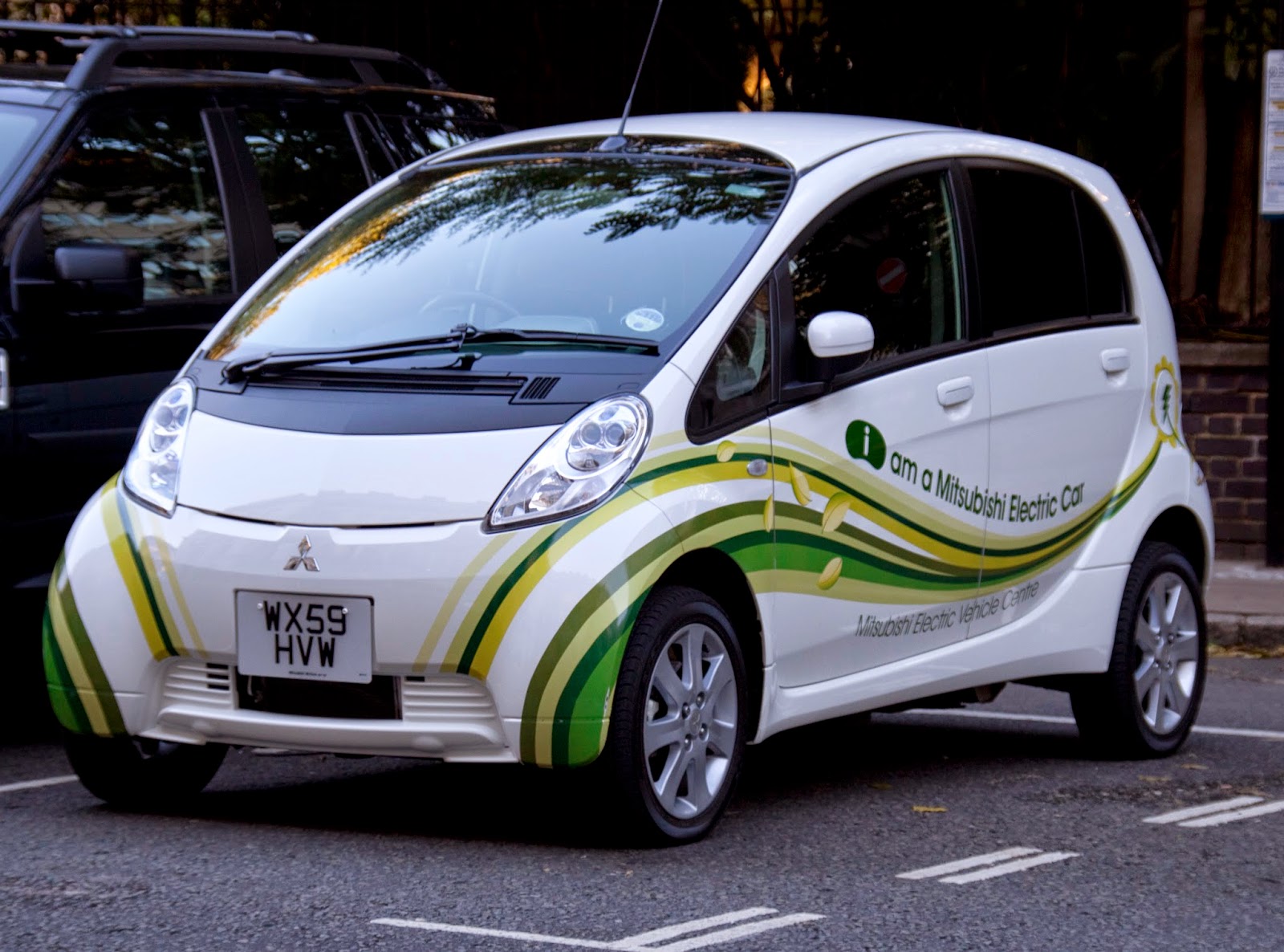
The global economic recession in the late 2000s made ​​many automotive manufacturers world cars leave large and wasteful, and switch to small cars, hybrid and electric cars. California-based automotive company, Tesla Motors, Tesla Roadster began development in 2004, and then released to the public in 2008 until January 2011, Tesla has managed to sell 1,500 units in 31 countries Roadster. Mitsubishi i was launched for fleet use in Japan in July 2009, and went on sale to individuals in April 2010 i go on sale in Hong Kong in May 2010, and Australia began in July 2010.

Sales of the Nissan Leaf in Japan and the United States began in December 2010, although in the initial launch is only available in some areas only with a limited number anyway.

As of September 2011, electric cars are sold in the market is , Buddy, C1 , Transit Connect Electric, Mercedes-Benz Vito E-Cell, Smart ED, Whip and.- The History of Electric Cars

Electric Cars The Future Of Driving

Electric Cars The Future Of Driving - In the past few years, you will see that there has been a significant increase on the demand for electric cars. In fact, more and more people are now considering selling their old gasoline powered car and go electric. And, there are people who are now proud owners and drivers of electric cars.
Electric Cars The Future Of Driving

So, just what is it with electric cars that a lot of people are now buying one for their own and is easily replacing conventional gasoline powered cars?

First of all, you have to consider the electric cars are more expensive than conventional cars. It is also slower and electric cars are also smaller in size compared to conventional gasoline powered cars. And, even though this is the case, a lot of people still prefer electric cars over gasoline powered cars.

The most popular reason for this fact is that electric cars are a lot cheaper to drive than gasoline powered cars. Why?

Although electric cars are more expensive to buy off the market, you will find that it will be a lot cheaper to own in the long run. This is basically because electric cars run purely on electricity. It doesn’t use gasoline, which means that you won’t have to stop by the gasoline station ever again. Just imagine how much money you will save by not purchasing gasoline in order to make your car run?

Electric cars are powered by an electric motor instead of your traditional internal combustion engine. The electric motor gets its power from the batteries installed in the electric car. Although you do need to charge the batteries, you will see that with today’s battery cell technology, a dollar’s worth of electricity will be able to get you a hundred miles with your electric car before you ever need to recharge the batteries again.

So, if you use your car everyday, you can easily add 30 dollars in your monthly electric bill, which is way better than spending a hundred dollars a month in gasoline. In the long run, you will see that electric cars are far cheaper than conventional gasoline powered cars.

You also have to keep in mind that cars that run on electricity are not a new concept. In fact, cars like this were invented ever since the first car was developed. The idea was scrapped because of the available battery cell technology. Thanks to the advancement of technology, it is now possible for cars to run on electricity through batteries and do so efficiently.

These cars are made with lighter materials, and are significantly smaller than conventional cars. This is a great way to get a good power to weight ratio, which will make the car go faster and also go farther than its predecessors. Although the electric cars existing today aren’t as fast or as powerful as cars with internal combustion engine, it does offer what most people want today, which is big savings.

In addition to that, electric cars do not emit harmful gas, which contribute to greenhouse gas in the atmosphere and ultimately global warming. Because of the environmental concerns that people have today, electric cars are fast becoming popular, especially to people who are concerned about the environment.

These reasons alone are enough to give you the conclusion that electric cars will surely be the future of driving. It won’t be long until you see that most people will start driving electric cars.


Copied with permission from: http://plrplr.com/60760/electric-cars-the-future-of-driving/
Electric Cars The Future Of Driving